
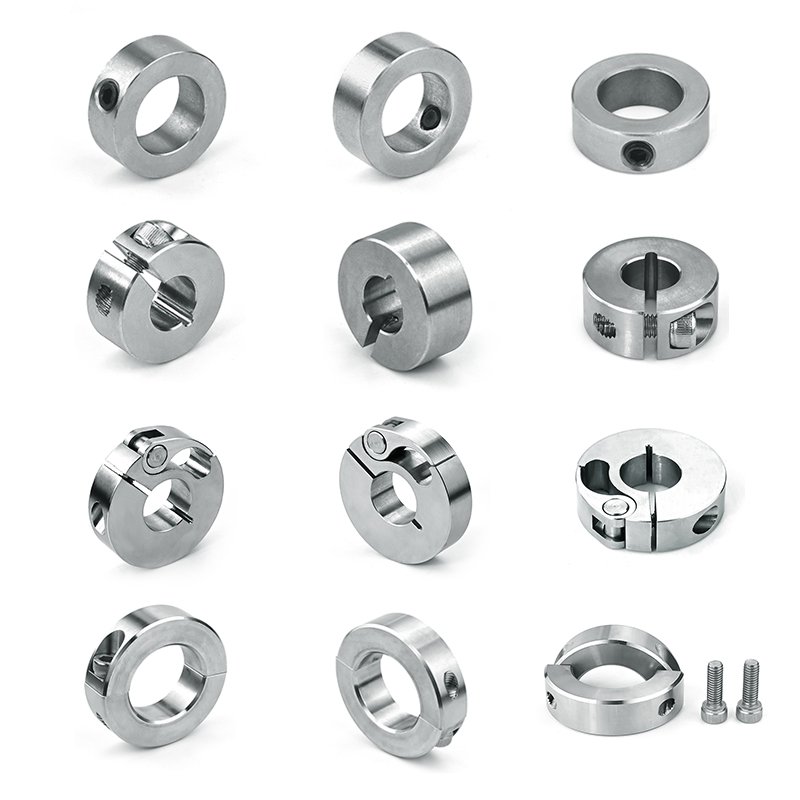
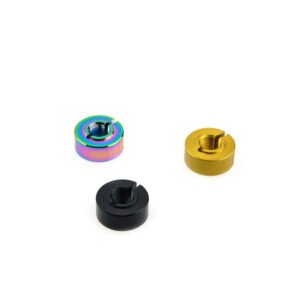
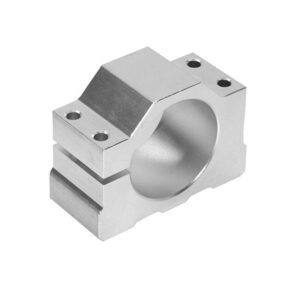
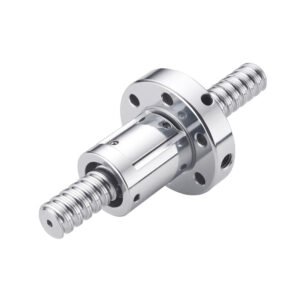
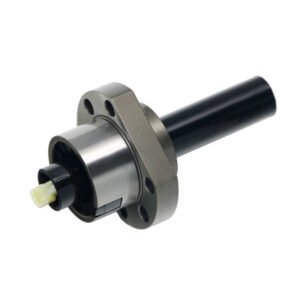
A shaft collar locates a component along a shaft, sets a gap or provides an axial stop. Start with the shaft size, the space around the collar and how often the assembly needs adjustment.
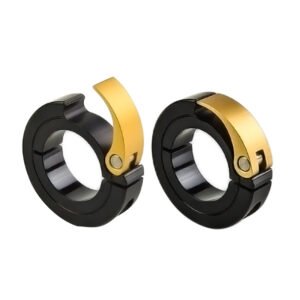
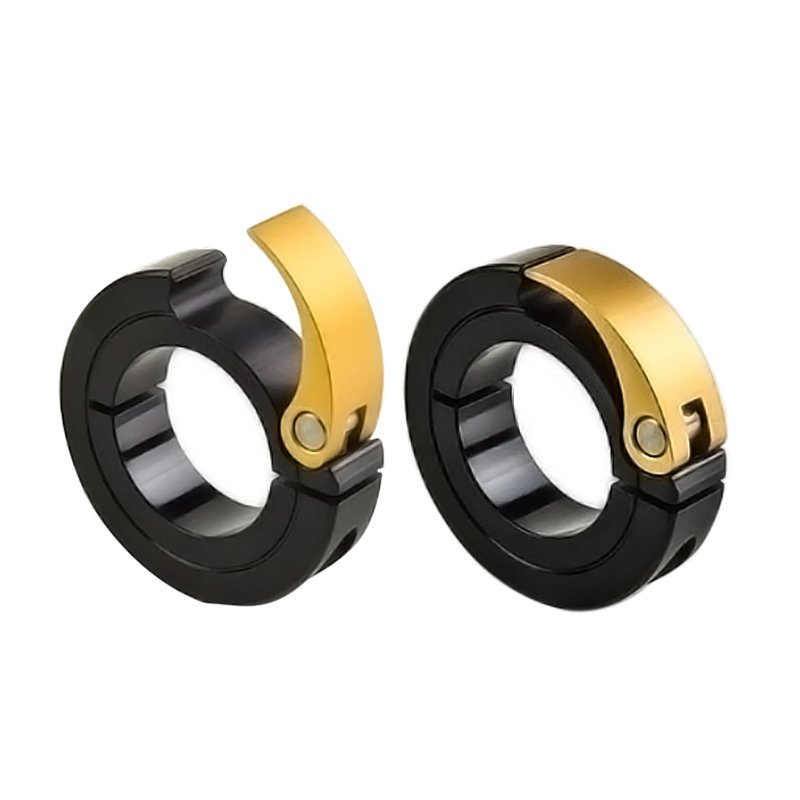
The two collars shown use levers for adjustment. Check the space around the shaft for the lever to open and close, and specify the installed lever position if clearance is limited.
Collar Type and Installation
- Set Screw: Specify the screw point and shaft contact area. Mark any flat or recess on the shaft drawing.
- One-Piece Clamp: Allow access from the shaft end and room to reach the clamp screw.
- Two-Piece Clamp: Consider this design for installation around a shaft with an obstructed end. Allow access to both halves and the fasteners.
- Quick-Release Lever: For frequent repositioning, specify the adjustment range, lever clearance and required axial holding load.
Shaft Fit and Drawing References
- Bore: For an H7 bore, provide the nominal size and mating shaft tolerance. If using explicit bilateral limits, confirm the required value. ±0.01–0.02 mm is a drawing reference.
- Outside Diameter and Width: Dimension each feature separately. Review ±0.02–0.05 mm as a reference for the outside diameter and any other identified dimensions.
- Geometry: For a concentricity reference of ≤0.02 mm, identify the controlled surface, datum and measurement setup. If the collar face locates a component, specify its relationship to the bore separately.
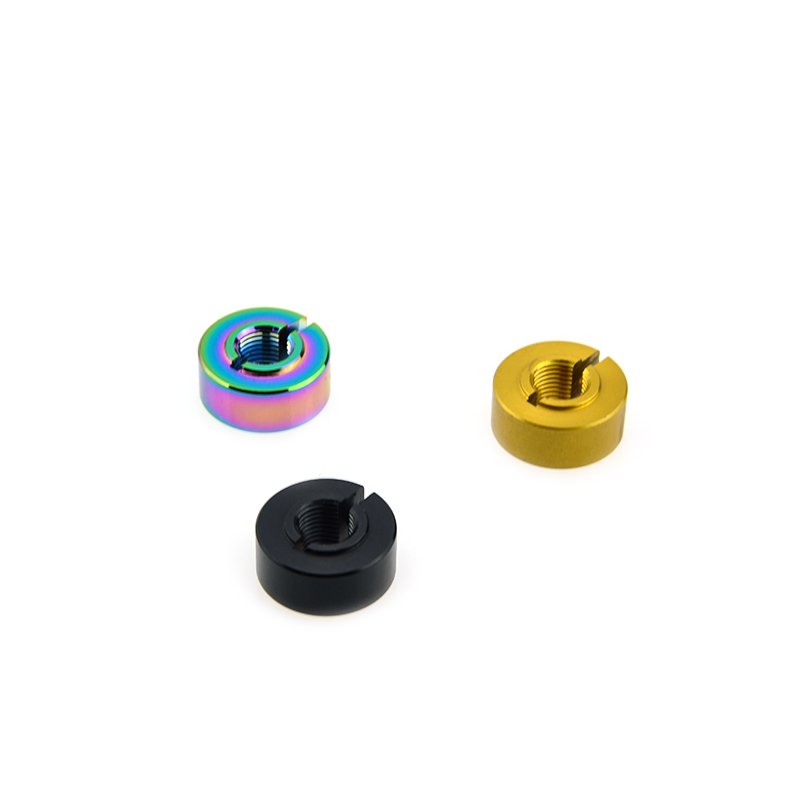
- Threads: Specify the thread series, size, pitch and fit class for the fasteners, such as ISO metric, UNC or UNF as applicable.
Material and Surface Finish
Review carbon steel, 304 or 316 stainless steel, or aluminum alloy against the application. Specify the grade, condition and finish for the collar and hardware. Identify surfaces for black oxide, zinc plating, anodizing or passivation where applicable, with any separate requirements for the bore and locating faces. Explore our CNC machining processes.
Axial Holding and Inspection
Share the axial load, load direction, duty cycle and shaft surface condition. State which dimensions to inspect before or after clamping. Include the tightening torque or lever setting for the installed assembly. For a slip test, define the load, fixture and allowable movement. If the collar rotates with the shaft, provide operating speed and any balance requirement.
Request a Shaft Collar Quote
Send the shaft and collar drawings, preferred design, material, finish, hardware details, quantity and any inspection or holding test requirements.
Discuss your shaft collar project or email eleven@grancen.com.
Reviews
There are no reviews yet.