
Surface finish is not simply a color choice made after CNC machining. It can influence corrosion behavior, wear, electrical contact, cleaning, appearance, fit and the way a finished part is inspected. For a buyer, the useful question is not “Which finish looks best?” but “Which finish supports the part’s function without adding unnecessary process risk?”
This guide explains common routes for CNC machined metal parts and the information a supplier needs to quote them responsibly. Final suitability should be confirmed against the specified alloy, service environment, mating features and drawing requirements.
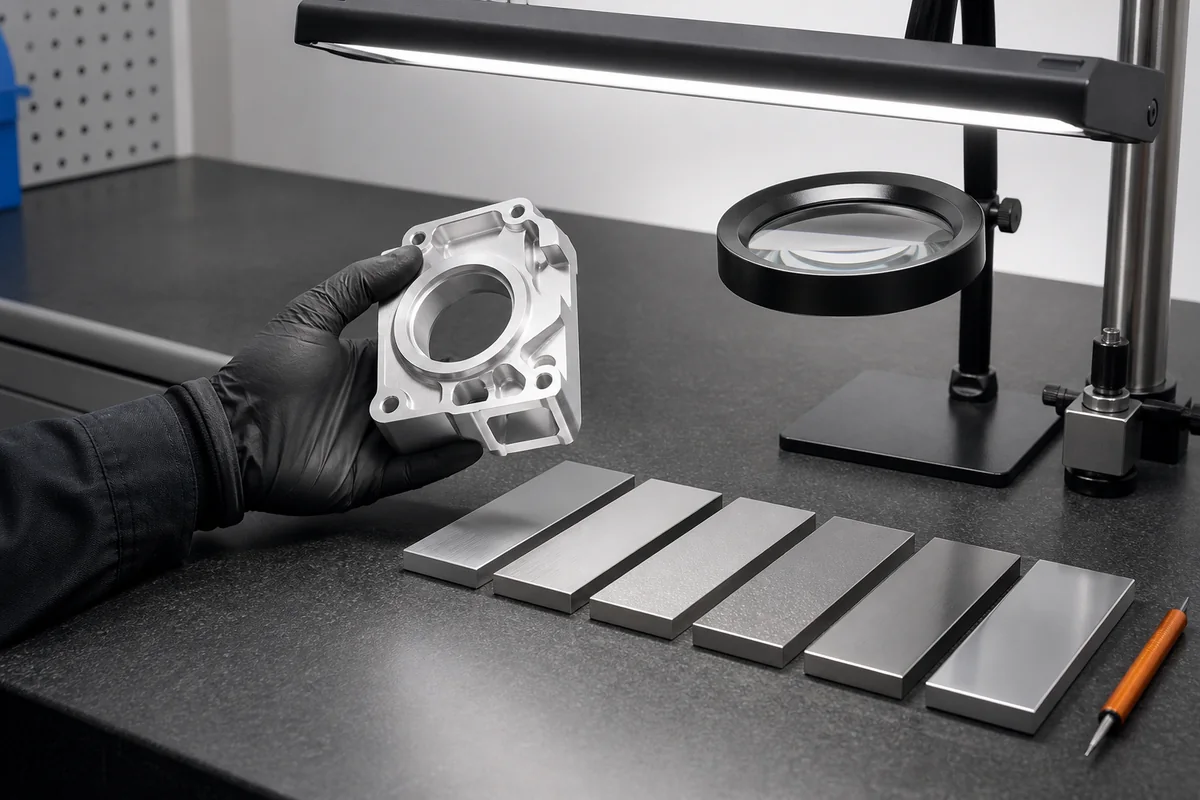
Start With Function, Material and Drawing Requirements
A finish should solve a defined requirement. Cosmetic housings may need a consistent texture and controlled color. Sliding components may prioritize wear behavior. Electrical parts may need conductive contact areas. Stainless components may require a cleaning or passivation route, while aluminum parts are frequently reviewed for anodizing.
The material grade matters because finishing reactions and appearance can vary by alloy and heat treatment. Geometry matters too: threaded holes, deep recesses, sharp edges, sealing surfaces and tight fits may require masking, allowances or special handling. Mark critical regions on the drawing instead of relying on a general note that applies equally to every surface.
Common CNC Surface Finish Routes
As-machined
An as-machined surface retains visible tool paths and avoids a separate finishing operation. It is often practical for internal components and functional prototypes when appearance is secondary. Buyers should still specify whether burr removal, edge treatment or a particular visual standard is required. “As-machined” does not automatically define every cosmetic detail.
Bead blasting or sandblasting
Media blasting can soften machining marks and create a more uniform matte texture. The result depends on the media, pressure, distance, exposure time and part material. Delicate edges, precision bores, threads and sealing surfaces may need protection. If several parts must match visually, define an approved sample or appearance range rather than relying only on a written finish name.
Anodizing for aluminum
Anodizing forms an oxide layer on aluminum and can support corrosion protection, wear behavior and cosmetic color. Alloy composition and surface preparation affect the final shade, so color matching should be discussed early. Because the process changes the surface, drawings should identify threaded features, bores, electrical contact areas and mating dimensions that may require masking or post-finish consideration.
Passivation and electropolishing
Passivation is commonly considered for suitable stainless-steel components as a chemical treatment after manufacturing and cleaning. Electropolishing removes a small amount of surface material electrochemically and can produce a brighter, smoother appearance on compatible parts. These are different processes, so the RFQ should name the required route or applicable specification instead of using the terms interchangeably.
Electroplating
Electroplating deposits a metal layer for objectives such as corrosion protection, conductivity or appearance. Material compatibility, undercoat selection, masking and thickness distribution all need review. Corners, recesses and internal features may not build uniformly, so critical dimensions should be identified and inspected in the finished condition where appropriate.
Mechanical polishing and brushing
Polishing uses abrasive steps to reduce visible roughness and create a brighter surface. Brushing produces a directional grain that is often selected for visible panels or housings. Both are operator- and geometry-sensitive. State the required grain direction, protected features and appearance standard, and consider approving a representative sample before repeat production.
Powder coating
Powder coating creates a cured polymer layer on compatible conductive metal parts and offers broad color and texture choices. The coating can affect edge definition, holes, threads and fits. An RFQ should therefore identify color or reference standard, gloss or texture, cosmetic zones, masking requirements and any dimensions that apply after coating.
How Finishing Affects Machining and Inspection
Machining and finishing plans should be developed together. A part may need extra stock, protected datum surfaces or a defined sequence between machining, heat treatment and finishing. Sharp edges can influence coating coverage, while deep pockets may be difficult to finish uniformly. Marking, assembly and adhesive bonding can also impose local surface requirements.
Dimensions can be interpreted differently before and after finishing. A buyer should state which dimensions are final acceptance features and whether masking is allowed. Inspection methods should match both the geometry and the finish: a cosmetic comparison, coating verification and dimensional measurement answer different questions. Clear acceptance criteria reduce disputes that cannot be resolved from a generic “good finish” note.
What to Include in a Surface-Finish RFQ
- Controlled 3D model and dimensioned 2D drawing
- Material grade and heat-treatment condition
- Finish process and applicable specification, if one is required
- Color, texture, gloss and acceptable appearance range
- Cosmetic surfaces and non-cosmetic surfaces
- Masking requirements for threads, bores, datums and contact areas
- Dimensions and tolerances that apply after finishing
- Prototype and expected production quantities
- Inspection records, sample approval or packaging requirements
Frequently Asked Questions
Can the finish be selected after machining is complete?
Sometimes, but early selection is safer. The finish may affect allowances, edge design, masking, workholding, cleaning and final inspection. Late changes can create fit or appearance issues even when the machined part was correct.
Will two finished parts always look identical?
Not necessarily. Alloy batch, surface preparation, geometry and process conditions can influence color and texture. When appearance is important, identify cosmetic zones and agree on a sample or controlled comparison method.
Choose a Finish From the Part’s Requirements
A practical finish decision begins with function, material and acceptance criteria. Compare the expected benefit with its effect on dimensions, masking, appearance control and inspection. The result should be a complete manufacturing route rather than an isolated finishing note.
Review Grancen’s CNC machining capabilities and manufacturing process. For an active project, send the model, drawing, material and finish requirements through the Grancen customer requirements form.