
Moving a custom CNC part from an early prototype to repeat production is not only a matter of ordering more pieces. The drawing, material, machining route, inspection approach and communication process all need to support the next stage of the program.
For buyers managing international projects, a practical plan creates a controlled path from first article learning to a repeatable manufacturing route. This guide outlines the information and decisions that help a CNC project scale without assuming that every part needs the same process.
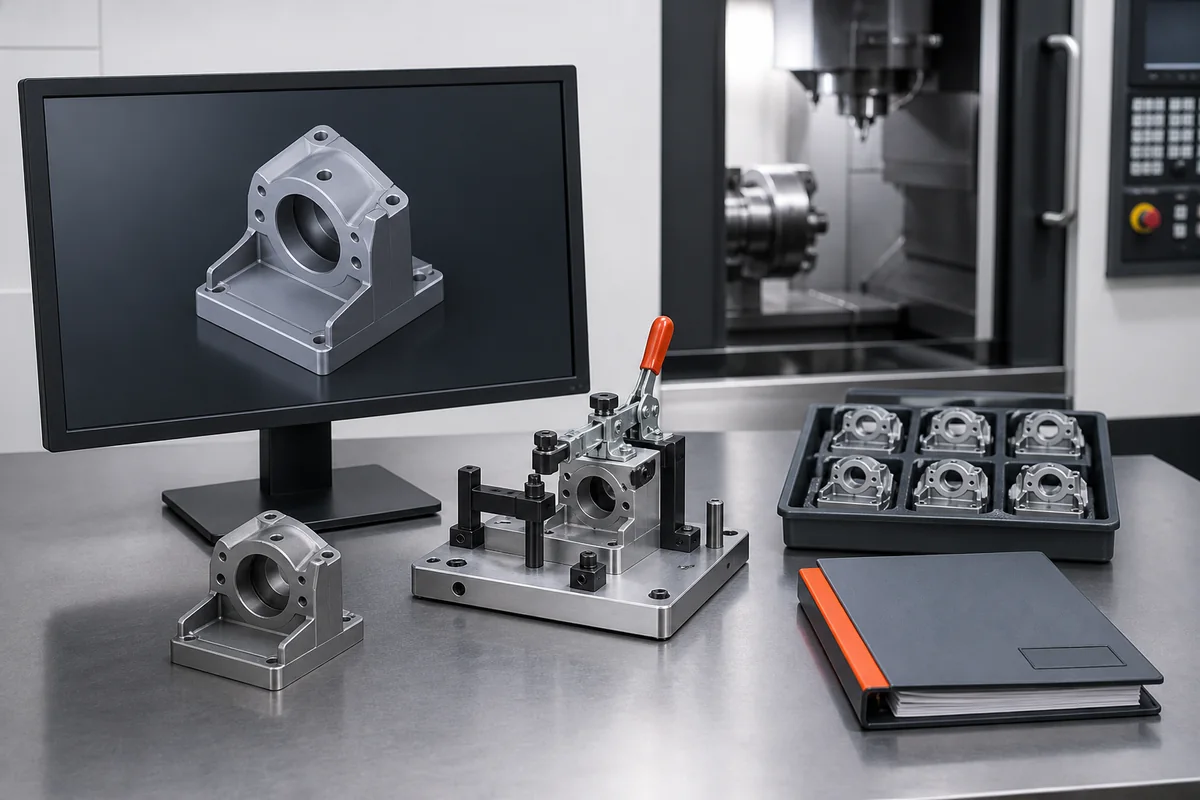
Start With a Controlled Design Package
A scalable project begins with a controlled source of truth. Supply the current 3D model, a dimensioned 2D drawing, material grade, revision identifier and quantity expectations. The drawing should make critical dimensions, datum relationships, thread callouts, surface requirements and acceptance criteria clear. If a feature matters only for an early prototype, identify that context rather than leaving a supplier to infer it.
Revision control becomes more important as quantity increases. A minor geometry change can affect tool access, fixture design, inspection planning or the way a secondary finish is applied. Keep engineering changes traceable and confirm which revision is authorized before a repeat order begins.
Use the Prototype Stage to Learn
A prototype is an opportunity to check form, fit and functional relationships before committing to a repeat route. It can reveal an interference between mating parts, an unclear datum, a difficult-to-measure feature or an unnecessary cosmetic requirement. The most useful review records what was learned and what must remain unchanged in the next revision.
Do not assume the quickest prototype route is automatically the right production route. A part that is practical with flexible setup work at low quantity may benefit from different workholding, tool selection or machining orientation when repeatability becomes the priority. The aim is to preserve intended function while reducing avoidable handling and ambiguity.
Review Manufacturability Before Scaling
Datums and feature relationships
Critical relationships should be tied to functional datums rather than a collection of disconnected dimensions. This lets machining, workholding and inspection follow the same reference logic. Clearly identifying the surfaces that locate the part in assembly helps a supplier evaluate setup strategy and measurement access.
Tool access and setups
Deep pockets, narrow slots, internal corners, angled holes and multi-face features may influence the number of setups and the cutting tools required. More advanced equipment is not automatically the best answer; the useful choice is the simplest capable route that reaches the required geometry and can be inspected responsibly.
Material and finishing sequence
Material condition, heat treatment and surface finish can affect both machining and final dimensions. Specify whether dimensions apply before or after finishing, which surfaces require masking and which areas are cosmetic. A defined sequence helps avoid a finish decision late in the project that changes fit, thread engagement or inspection access.
Plan Inspection Alongside the Process
Inspection planning should answer the same questions as the drawing: what must be measured, from which datums, at what stage and against what acceptance criteria. A prototype inspection result is most valuable when it identifies the critical features that need ongoing attention, not when it produces a long list without functional priority.
For repeat orders, agree on the records that are useful to the project. The appropriate level depends on the part, its application, customer requirements and the defined acceptance method. Avoid treating a generic report as a substitute for a clear drawing and review plan.
Build a Repeatable Communication Loop
Scaling works best when questions are resolved in a documented loop: buyer requirements, manufacturing feedback, approved revision, sample learning and repeat-order confirmation. Include the expected order pattern, packaging needs, preferred update points and the person authorized to approve changes. This prevents a purchasing instruction from becoming disconnected from the latest engineering decision.
When a project involves several stakeholders, summarize decisions after each review: what changed, what remains under evaluation and which file revision is approved for the next step. This simple record helps purchasing, engineering and quality teams work from the same information across time zones.
RFQ Checklist for a Scalable CNC Project
- Controlled CAD model and 2D drawing
- Material grade and required condition
- Prototype quantity and expected repeat volumes
- Critical dimensions, datums and functional mating context
- Surface finish, marking and packaging needs
- Inspection criteria and useful documentation
- Revision-control and approval contact
Make the Production Route a Deliberate Choice
A prototype-to-production plan should convert early learning into a controlled repeat route. Clear inputs, manufacturability review, datum-based inspection and documented change control help buyers evaluate decisions before they become costly production interruptions.
Review Grancen’s CNC machining capabilities and manufacturing process. To discuss a current project, share the latest drawing, model and requirements through the Grancen customer requirements form.