
Choosing between forging, casting and CNC machining is rarely a question of which process is “best.” Each route shapes material differently, creates a different starting geometry and places cost in different parts of the program. A sound choice depends on the component’s function, material, geometry, quantity, critical interfaces and inspection plan.
For engineering and sourcing teams, the useful comparison starts with the released design rather than a generic price ranking. Grancen supports forging-related parts, precision casting and CNC machining, so a project can be reviewed against the information that actually controls manufacturability. The following framework helps buyers decide which route deserves a detailed quotation and where a combined route may be more practical.
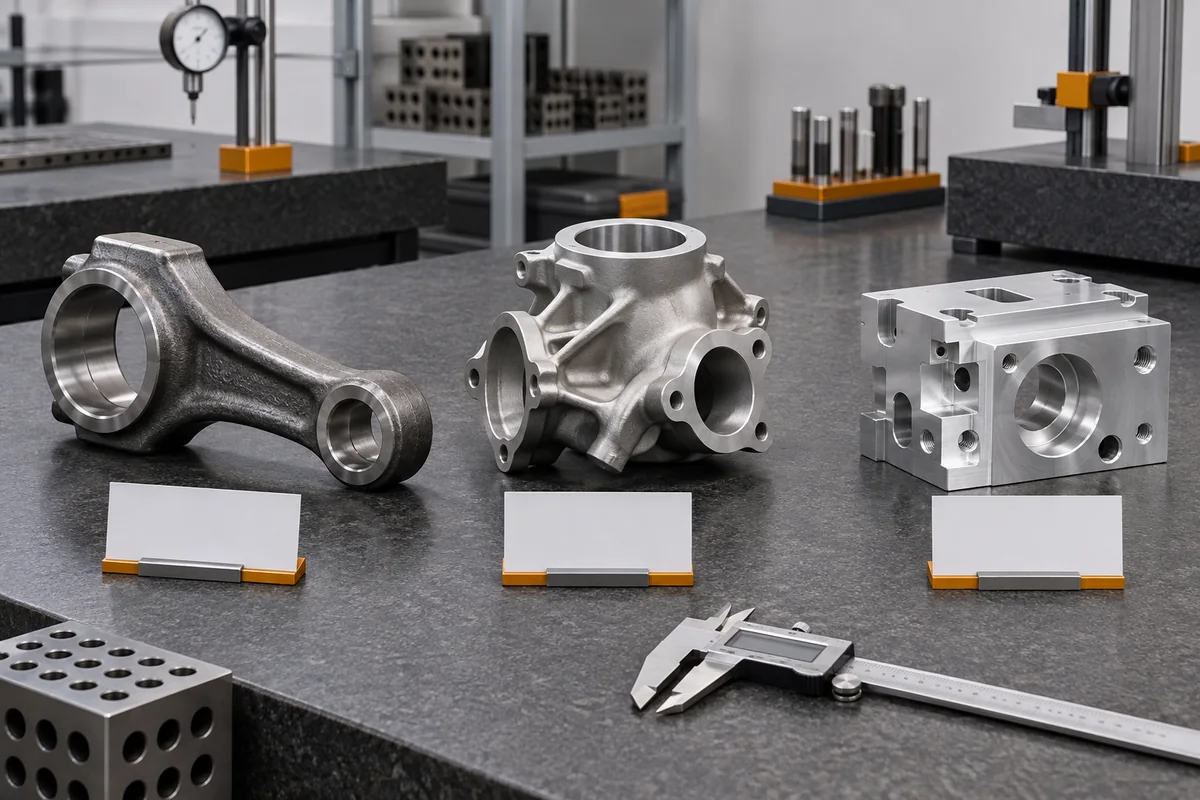
Start With the Part’s Real Decision Drivers
Begin by separating fixed requirements from preferences. Fixed requirements may include material condition, load path, envelope, mating geometry, sealing faces, bearing locations, threads, datum structure and environmental exposure. Preferences may include a familiar process, a legacy drawing convention or an appearance target that can be achieved in several ways.
Quantity matters, but it should not be used alone. Tooling commitment, material use, machining time, finishing, inspection effort and the expected design life all affect the commercial picture. A lower unit cost is not helpful if the route cannot maintain the required interfaces or if a likely design revision makes dedicated tooling difficult to justify.
When Forging Deserves Consideration
Forging forms metal through controlled deformation. It is often considered for components that benefit from a robust, continuous form and a material flow aligned with the shape. Typical candidates include compact load-bearing shapes, shafts, links, fastener-related forms and parts that will receive machining on selected surfaces after forming.
The design must suit the selected forging route. Parting strategy, draft, transitions, corner radii, section changes and access for trimming or machining all need review. A forged blank is not normally the final definition of every feature. Holes, threads, bearing seats, datum faces and sealing interfaces may still require CNC machining. The drawing should distinguish formed surfaces from machined surfaces and identify where stock allowance is expected.
When Precision Casting Fits the Geometry
Precision casting is useful when the component has a complex, consolidated metal form that would be difficult to create from simple stock without substantial removal or multiple assembled pieces. Curved passages, integrated bosses, ribs and transitions can make casting attractive, provided the design supports pattern and shell processing.
Buyers should review wall transitions, isolated heavy sections, internal access, gating assumptions and the surfaces that will be finished later. Casting should not be treated as a promise that every feature emerges complete. Critical interfaces may still need machining, and visual, dimensional, material or other acceptance requirements must be agreed for the specific project. The earlier article on the precision casting process explains that workflow in more detail.
When CNC Machining Offers the Clearest Route
CNC machining creates the part by removing material from billet, plate, bar or a near-net blank. It is often the clearest route when geometry is accessible to cutting tools, revision flexibility matters, dedicated forming tooling is difficult to justify or a high proportion of the surfaces are already functional and tightly defined.
Machining does not remove the need for design review. Deep pockets, slender walls, long-reach tools, difficult setups and poorly aligned datums can add risk. Material size and the volume removed also influence the route. The best machining plan may use turning, milling, drilling, wire EDM or a combination, depending on the part. Explore Grancen’s CNC machining capability for the relevant service context.
Compare the Routes Across Six Practical Questions
1. What Shape Must the Starting Blank Create?
Forging favors shapes that can be formed with workable die access and transitions. Casting can create consolidated contours and features around a pattern. CNC machining is strongest when tools can reach the required surfaces through stable setups. Evaluate the whole form, not one attractive feature.
2. Which Surfaces Control Function?
Mark datums, fits, sealing faces, threads and mating interfaces on the drawing. If most surfaces require machining, a direct CNC route may be simpler. If only selected interfaces need machining, a forged or cast blank followed by CNC finishing may reduce unnecessary stock removal.
3. How Stable Is the Design?
Dedicated tooling needs a controlled revision. When geometry is still moving, machining may provide a more flexible development route. A project can later transition to a near-net blank if quantity, design maturity and validation support the change.
4. What Material Condition Is Required?
Material specification and required condition should be defined before comparing routes. Do not assume that the same nominal alloy behaves identically after different forming, heat-treatment and machining histories. Any project-specific mechanical or metallurgical requirement belongs in the released specification.
5. What Inspection Evidence Is Needed?
The inspection plan should match both the process and the drawing. Machined interfaces may need dimensional verification from agreed datums. Forged or cast areas may also require visual or other checks when the specification calls for them. List required records with the RFQ so their scope can be confirmed before production.
6. What Is the Full Program Cost?
Compare tooling, material, machining, finishing, inspection, packaging and the expected quantity profile. Include the commercial effect of revisions and validation. A route with higher initial tooling may suit a stable repeat program, while machining may be preferable when flexibility carries more value.
A Hybrid Route Is Often the Practical Answer
The three processes are not mutually exclusive. Forged or cast blanks are frequently machined to establish controlled interfaces. A CNC prototype can help validate geometry before tooling is committed. In other cases, a machined component may remain the better solution throughout the program because its volume or revision pattern does not support a forming tool.
When evaluating a hybrid route, agree which supplier controls the released model, blank allowance, datum transfer, secondary operations and final inspection. Ambiguity between the blank drawing and the finished-part drawing can create more risk than the process selection itself.
Prepare an RFQ That Enables a Real Comparison
Provide matching 3D and 2D files, material requirements, expected quantities, revision status, critical features, surface or heat-treatment notes, inspection records and packaging needs. State whether alternative processes are welcome and identify any requirement that cannot change.
A responsible quotation should explain the proposed route and the assumptions that still need confirmation. To compare forging, casting and machining for a current component, review Grancen’s forging-related capability, precision casting capability and CNC service, or send your drawings and project requirements for a process review.