
Choosing between CNC machining and composite manufacturing is not simply a material decision. It is a product-architecture decision that affects geometry, load paths, tooling, inspection, secondary operations and the way a supplier prepares production.
For an overseas sourcing team, the most useful comparison begins with the part’s function rather than a preferred process. CNC machining removes material from a rigid workpiece. Composite manufacturing builds a part from reinforcement and resin, often through layup, molding and curing. Each route can be appropriate, and some assemblies benefit from using both.
Start With the Functional Requirement
Before comparing processes, define what the component must do. Identify the main loads, operating environment, mating interfaces, envelope, target weight, cosmetic surfaces and inspection needs. Separate requirements that are fixed from preferences that can still change.
This prevents a common sourcing problem: selecting a process because it is familiar, then redesigning the part around that choice. A better RFQ explains the application and allows the manufacturer to review the route with the drawing, model and expected quantity.
Where CNC Machining Fits Well
CNC machining is generally a strong candidate for rigid components with defined datums, precise mating features, holes, threads, pockets and controlled edges. It supports metals such as aluminum, stainless steel and brass or copper, as well as suitable engineering plastics. Grancen supports 3-, 4- and 5-axis machining, with the exact process selected after reviewing geometry and access.
Machining can be especially useful during development because design changes can often be managed by updating the controlled model and drawing rather than changing a dedicated molding tool. However, material removal, tool access, workholding and the number of setups still influence manufacturability and cost.
Where Composite Manufacturing Fits Well
Composite manufacturing is often considered when low mass, stiffness direction, corrosion behavior or an integrated shell geometry matters. Carbon fiber, fiberglass and aramid reinforcement can be combined with a resin system and process route selected for the part.
Supported routes may include prepreg compression, vacuum-assisted or bagged curing, CF-SMC compression, winding, pultrusion and plate production followed by CNC trimming. The laminate is not only a thickness value: ply direction, local reinforcement, core or insert strategy, molding pressure, cure method and edge treatment all affect the design. These details should be reviewed before the drawing is treated as production-ready.
Compare Tooling and Expected Quantity
The production quantity changes the decision. CNC machining relies on programming, cutting tools and workholding; composite production may require molds, patterns, trim fixtures or other dedicated aids. A tool can support repeatable geometry, but it also creates an engineering step that must be justified by the design and expected program volume.
Product teams should provide prototype quantity, expected batch quantity and any likely design revisions. The supplier can then distinguish a development route from the intended production route instead of pricing both as if they were identical.
Review Geometry and Interfaces Together
A machined part and a molded composite part handle geometry differently. Deep pockets, thin walls and inaccessible internal corners can make machining more difficult. Composite parts require attention to mold release, laminate consolidation, edge stability and how holes or inserts will be created.
Interfaces deserve particular attention. Define the datum scheme, fastener locations, bearing surfaces, bonded joints and any metal inserts. If a composite surface mates to a machined component, the assembly-level requirements should guide both parts rather than allowing separate suppliers to make incompatible assumptions.
Plan Inspection for the Chosen Route
Inspection should reflect how the part is made. Machined components are commonly reviewed against drawing dimensions, datums, threads and surface requirements. Composite parts may also require review of laminate condition, molded surfaces, trimmed edges, inserts and assembly features.
Not every characteristic needs the same control method. Mark critical features clearly, identify the required records and avoid applying a blanket tolerance without a functional reason. The inspection plan can then focus on characteristics that matter to fit and performance.
Consider a Hybrid Manufacturing Strategy
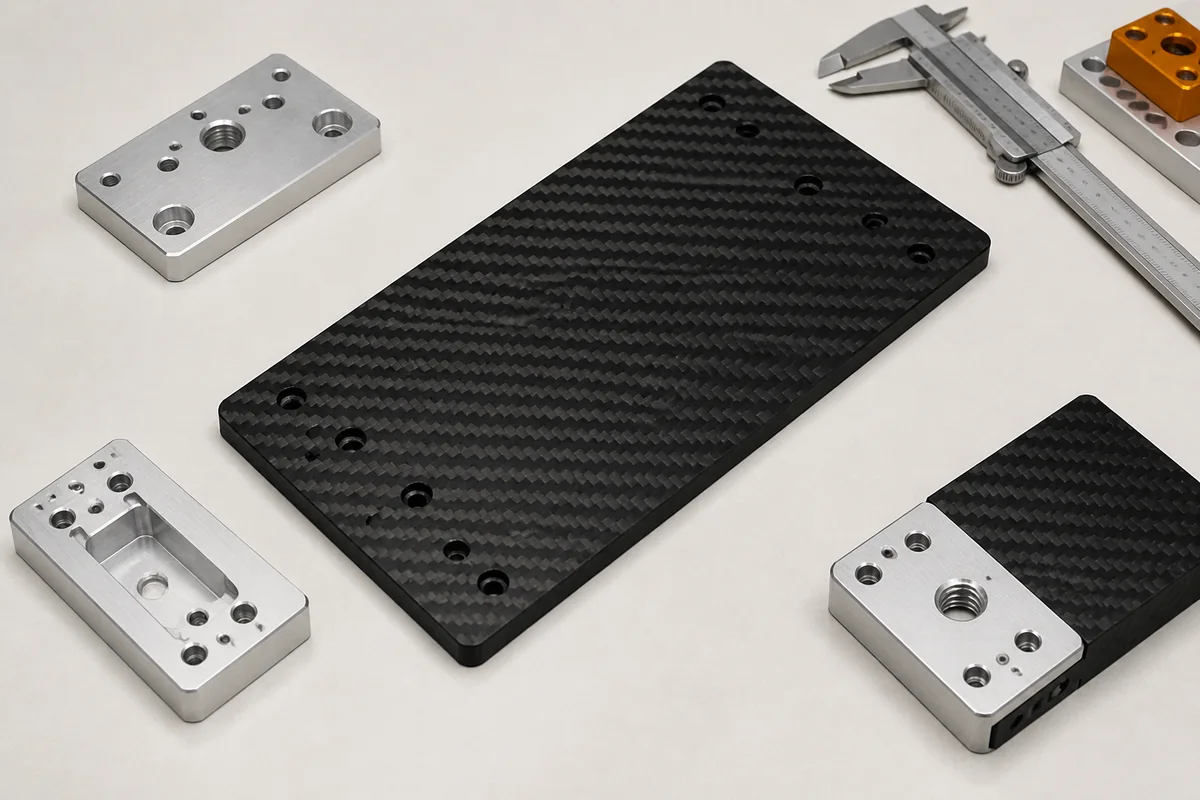
The decision does not always end with one process. A composite panel or housing can incorporate machined inserts, brackets or interface blocks. A machined prototype can also help validate geometry before a composite production tool is finalized.
A hybrid strategy works best when ownership of the interfaces is clear. Specify bonding or fastening assumptions, insert position, post-machining allowances and the inspection handoff between operations. This reduces the risk of a lightweight body and a precise interface being optimized independently.
Build an RFQ That Supports the Decision
For a useful process review, include:
- controlled 3D and 2D files;
- material or performance requirements, with acceptable alternatives identified;
- prototype, batch and expected program quantities;
- critical datums, interfaces and cosmetic surfaces;
- finish, assembly and inspection expectations;
- the operating environment and delivery context.
If some decisions are open, label them as open. That gives the manufacturer room to compare routes without treating an assumption as a confirmed requirement.
Select the Route as Part of the Whole Product
CNC machining favors defined rigid features and direct control of machined interfaces. Composite manufacturing can support lightweight structures and tailored reinforcement, but it requires coordinated laminate, tooling and finishing decisions. The correct route depends on the complete product requirement, not a single material property.
Grancen supports both CNC machining and carbon fiber and composite manufacturing. To compare routes for a current project, send your drawings and requirements for review.