
Aluminum and stainless steel are both established choices for CNC machined parts, but they solve different engineering problems. Selecting between them should begin with the component’s function, environment, loading, weight target, finish and inspection plan—not with a material name alone.
This buyer-focused comparison explains the practical questions to review before requesting a quotation. It is a starting point for discussion; the final alloy, temper or condition should be confirmed against the controlled drawing and project requirements.
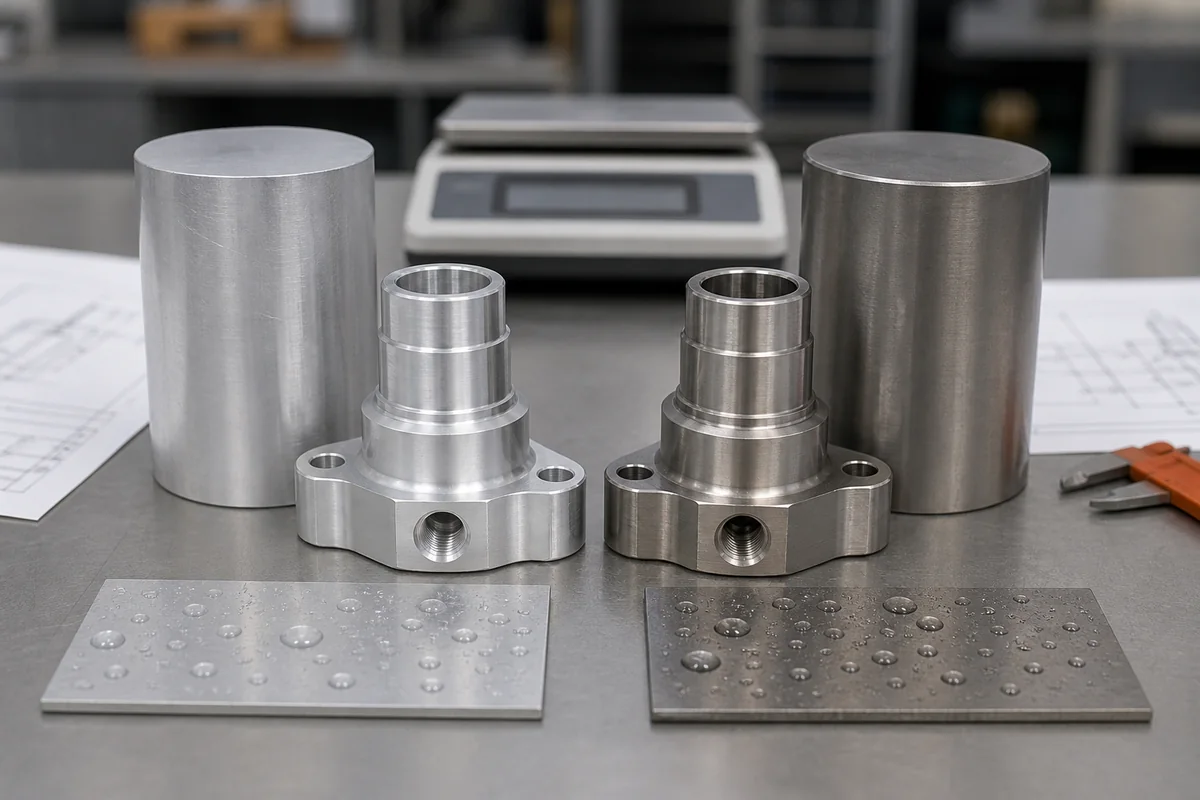
Aluminum vs Stainless Steel at a Glance
| Decision factor | Aluminum | Stainless steel |
|---|---|---|
| Weight | Often preferred when reducing component mass is important | Heavier, which may be acceptable or useful in a robust assembly |
| Machining behavior | Many common grades machine efficiently with suitable tooling | Grade and condition strongly influence cutting forces, heat and tool strategy |
| Strength and stiffness | Useful strength-to-weight options across several alloy families | Often selected when higher strength, stiffness or wear demands govern |
| Corrosion planning | Natural oxide protection can be supplemented by conversion coating or anodizing where appropriate | Many grades offer strong corrosion resistance, but the environment and grade still matter |
| Typical finish routes | As-machined, bead blast, anodizing, chemical conversion and coating options | As-machined, passivation, bead blast, brushing, polishing and electropolishing options |
When Aluminum Is the Better Starting Point
Aluminum is commonly considered for lightweight housings, brackets, covers, fixtures and other parts where mass reduction is valuable. Many aluminum alloys have favorable machinability, so pockets, holes and external profiles can often be produced with productive cutting conditions. That does not make every design automatically simple: thin walls, deep cavities and broad flat surfaces still require attention to workholding, tool access and distortion risk.
Alloy selection matters. A general-purpose grade may offer a useful balance of machining, strength and corrosion resistance, while other aluminum families prioritize higher strength, formability or response to anodizing. The purchase specification should identify the exact alloy and condition rather than simply stating “aluminum.”
When Stainless Steel Deserves Priority
Stainless steel is often selected when the part needs greater mechanical robustness, wear resistance, temperature capability or corrosion performance in a defined service environment. It can be appropriate for shafts, fittings, fasteners, valve components, machine elements and structural hardware. However, “stainless steel” covers different grades and conditions; corrosion behavior, strength, hardness, magnetism, weldability and machinability can vary.
Compared with many aluminum alloys, stainless steel can place higher demands on cutting tools, heat management, chip control and setup rigidity. Features such as deep slots, slender walls and small tools therefore deserve early review. A grade designed for improved machinability may support a different production strategy from one chosen for a demanding corrosion environment.
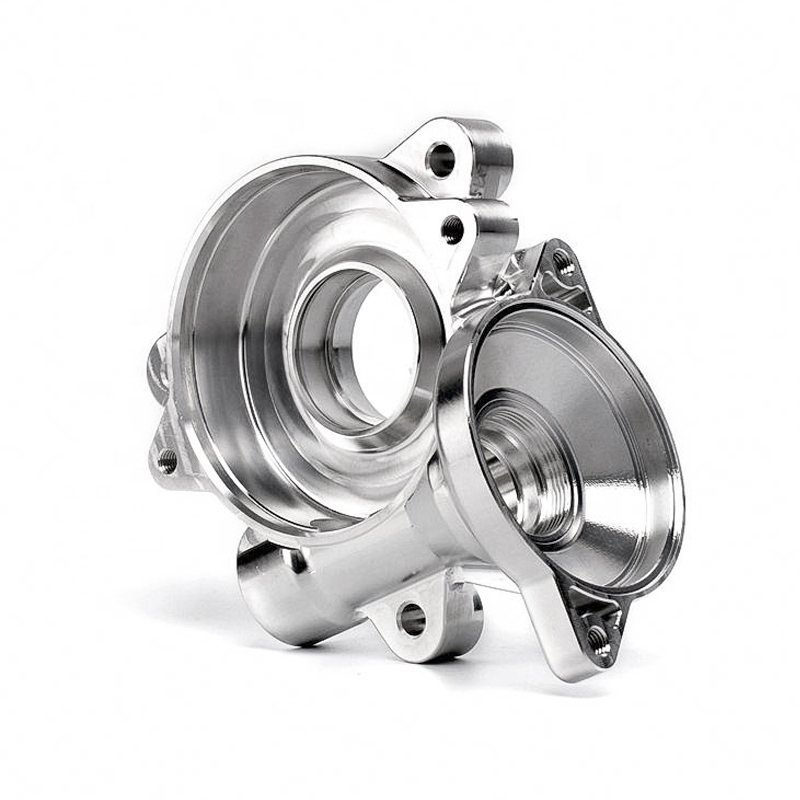
Compare the Materials Against the Part’s Real Priorities
Weight, strength and stiffness
For moving assemblies, handheld equipment or transport-sensitive products, aluminum can help reduce mass. Stainless steel may be preferred when section size is constrained and mechanical or wear demands are more important than weight. Avoid comparing material families only by a single strength number; geometry, loading direction, fatigue, fastener interfaces and safety factors also influence the decision.
Corrosion and operating environment
Humidity, chemicals, salt exposure, cleaning agents and contact with dissimilar metals can change the corrosion picture. Stainless steel is not universally immune, and aluminum may require a specified finish or isolation strategy. Identify the operating environment during quotation so material and finish can be reviewed together.
Geometry, quantity and machining cost
Material price is only one cost driver. Stock form, removed volume, tool access, setup count, cycle strategy, inspection effort and finishing all contribute. Aluminum’s machining behavior can be advantageous for material-heavy geometries, while stainless steel may justify additional manufacturing effort when its properties reduce risk in the final application. Quantity also affects how fixtures, tooling and repeatability are planned.
Plan Surface Finish Before Releasing the Drawing
Aluminum projects may use as-machined, bead-blasted, anodized, conversion-coated or painted surfaces, depending on the confirmed requirement. Stainless steel projects may use as-machined, passivated, bead-blasted, brushed, polished or electropolished surfaces. Each route has different implications for appearance, corrosion behavior, dimensional control, masking and inspection.
Mark cosmetic zones, mating surfaces, electrical contact areas and surfaces that must not be coated. Clarify whether dimensional limits apply before or after finishing. For assemblies, also review thread fit, press fits, bearing locations and sealing surfaces with the finish stack in mind.
What to Include in the RFQ
- Controlled 3D model and matching 2D drawing revision
- Exact alloy, temper or condition, plus any permitted alternative
- Prototype and expected production quantities
- Critical datums, tolerances, threads and functional interfaces
- Operating environment and relevant corrosion concerns
- Finish, color, texture, masking and cosmetic requirements
- Inspection records, packaging and assembly expectations
Choose Through Drawing Review, Not Assumption
Aluminum is often the stronger starting point for lightweight, machining-efficient components. Stainless steel is often the stronger candidate when mechanical robustness, wear or a demanding service environment leads the specification. The correct answer depends on the exact grade, geometry, finish and acceptance criteria.
Review Grancen’s CNC machining capabilities, CNC aluminum examples and CNC stainless steel examples. To compare options for a live project, send the controlled files and requirements through the Grancen customer requirements form for an engineering review.