
Precision casting is often considered when a part combines a complex shape with functional metal features that are difficult to form economically from a simple billet or plate. The process can reproduce external contours, internal passages and integrated bosses before selected surfaces receive secondary machining or finishing. For an engineering buyer, the important decision is not simply whether a part can be cast. It is whether the drawing, material, quantity and inspection plan support a stable route from pattern development to an accepted component.
A practical program therefore starts with design review. Grancen supports precision casting alongside CNC machining, sheet metal fabrication, cold heading and composite manufacturing, so the manufacturing route can be discussed against the released geometry and project requirements. This article explains the main stages, the information that reduces quotation risk and the checks that should be agreed before production.
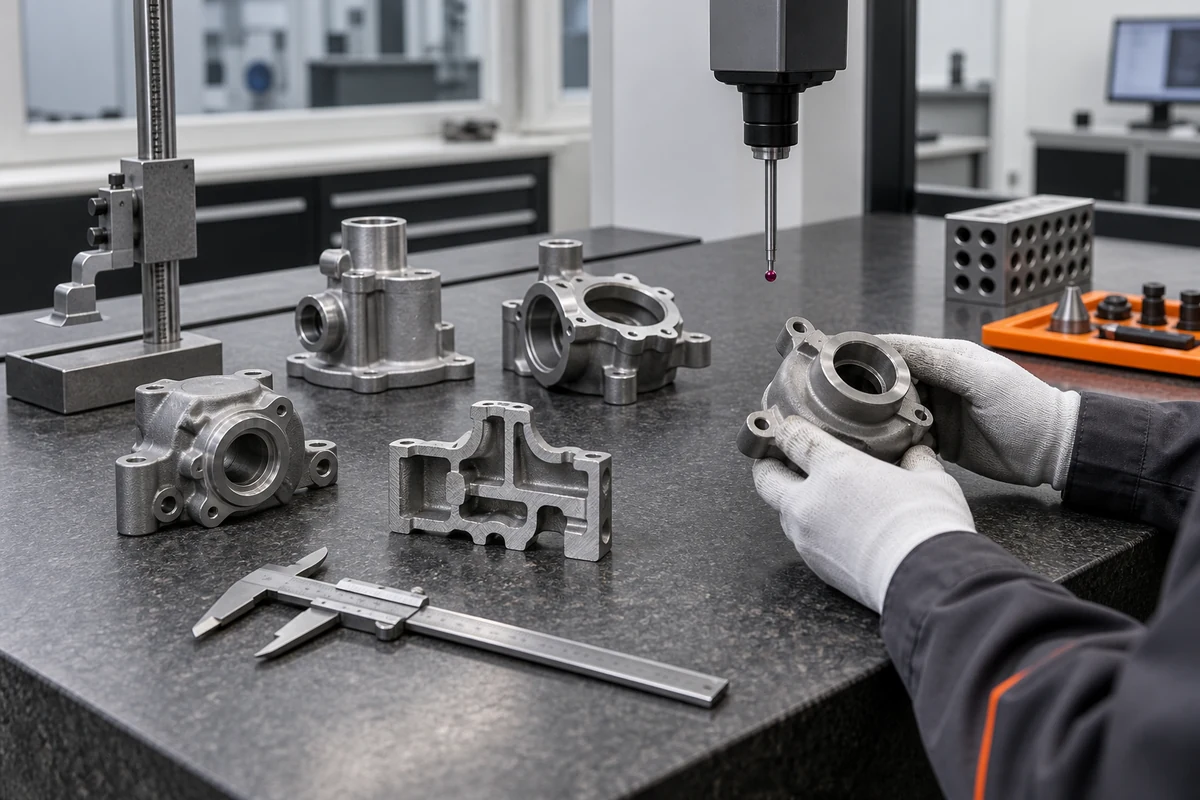
1. Start With Geometry and Process Fit
The first review asks what the casting is expected to achieve and which features will be machined later. Precision casting is useful for consolidated shapes, curved transitions, ribs, bosses and other details that may reduce the number of separate pieces. It should not be treated as a way to avoid every machining operation. Datum faces, sealing surfaces, threads, bearing seats and other critical interfaces may still need CNC machining or a defined finishing step.
Share the native CAD model when available, together with a released drawing in a readable format. The supplier should be able to see wall transitions, enclosed areas, draft or access assumptions, machining allowances and the surfaces that control assembly. If the design is still changing, identify the revision and the features that remain open. That makes the quotation a technical review rather than a price attached to an unstable file.
Questions to Resolve Before Quotation
- Which surfaces are functional, cosmetic or sacrificial?
- Which holes, threads or datum features will be machined after casting?
- Is the required material already specified, or does the project need a material review?
- What quantity, revision level and inspection records are expected?
2. Pattern and Tooling Development
After the geometry is understood, the pattern or tooling concept is developed around the chosen casting route. The tooling must reproduce the intended form while allowing the pattern to be removed and the ceramic shell to remain intact. Parting decisions, cores, gating and support features can affect both manufacturability and the amount of post-cast work.
Buyers should ask which tooling elements are included in the quotation, how revisions will be handled and what approval sample is expected. A clear record of the approved model, drawing revision and tooling assumptions helps prevent a correct part being produced to an obsolete definition. The right answer depends on geometry and quantity; a small prototype program may need a different level of tooling commitment than a repeat production program.
3. Wax, Shell and Metal Processing
In an investment-casting workflow, a pattern is formed, assembled where appropriate and coated to build a ceramic shell. The pattern is then removed before molten metal fills the cavity. The shell, gating design and thermal conditions influence how the metal reaches thin sections and how the final surface appears. The exact sequence and material choices must be confirmed during engineering review rather than assumed from a generic process label.
For the buyer, the useful control points are traceable process records, material identification and a defined visual standard. Avoid treating a stock photograph as evidence of a particular alloy, heat treatment or internal result. Those details belong in the released specification and the agreed inspection scope.
4. Removal, Finishing and Secondary Machining
Once the metal has solidified, the shell and gating are removed and the component is cleaned. Depending on the design, secondary operations can include deburring, surface preparation, heat treatment, CNC machining, thread creation or assembly. The drawing should distinguish cast surfaces from machined surfaces so that the inspection team knows which characteristics are being evaluated at each stage.
This is also the point where design-for-manufacturing feedback pays off. A generous machining allowance may support a datum or sealing face, while an inaccessible pocket may require a revised feature or a different process. When the cast shape and the machining plan are reviewed together, the supplier can identify risks before tooling is committed.
5. Inspection Planning That Matches the Drawing
Inspection should be planned from the drawing, not added after production. Start with the datums, critical dimensions, material or surface requirements and any visual acceptance criteria. A casting may need visual review for surface condition and cleanup, dimensional checks on machined interfaces and additional tests where the released specification calls for them.
Grancen’s broader manufacturing workflow includes drawing-based process review and inspection support across CNC, composite, sheet metal and casting work. The exact instruments, records and sampling plan should be agreed for the project. If a buyer needs a first-article report, material documentation or a defined measurement layout, list that requirement with the RFQ so it can be confirmed before production.
Useful RFQ Inputs
- Released 3D model and 2D drawing with revision status.
- Material designation and any required finishing or heat-treatment notes.
- Annual or project quantity, prototype expectations and packaging needs.
- Critical dimensions, datums, inspection records and acceptance criteria.
6. When Precision Casting Is the Right Route
Precision casting is a strong candidate when the part benefits from a consolidated, near-net-shape form and the project can support pattern development and a defined inspection plan. It may be less suitable when the geometry is simple, the quantity is very low or every surface must be machined from stock. In those cases, CNC machining, sheet metal or another route may offer a clearer path. The decision should follow the drawing and project priorities, not the process name alone.
Plan the Next Review
Send the drawing, 3D model, material, quantity and inspection requirements for a route review. Grancen can discuss precision casting together with machining and other supporting operations, then confirm the applicable process, records and commercial scope after review. Explore precision casting capability or send your project requirements for the next step.