

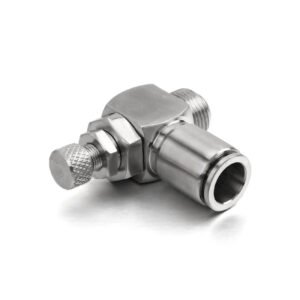
A quick exhaust valve provides a local exhaust path for a pneumatic actuator. Share the circuit and valve drawings so the supply, actuator, and exhaust connections can be reviewed for the application.
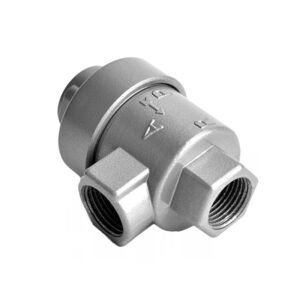
Circuit and Exhaust Path
In a typical pneumatic circuit, a quick exhaust valve routes air from the actuator to a nearby exhaust outlet. Supply the actuator model, relevant circuit drawing, working pressure differential, and required exhaust flow. Identify which connections serve the supply, actuator, and exhaust.
Threaded Ports and Installation
Give the exact designation, size, and sealing arrangement for each port. Include the installed envelope, access to the threaded connections, the exhaust direction, and any silencer or routed exhaust line. Provide expected backpressure and any restriction introduced by the complete exhaust arrangement.
Valve Body, Seals and Finish
Aluminum alloy, brass, or stainless steel may be reviewed to the drawing. Specify body material, seal material such as NBR, FKM, or PU, and the finish where applicable. See our Pneumatic Components.
Operating Conditions and Acceptance
State required supply and exhaust conditions, air and ambient temperatures, leakage and response criteria, and any required noise or cycle-time test. Specify the test setup for the complete circuit so the results can be compared with the intended installation.
Request a Quick Exhaust Valve Quote
Send your valve and circuit drawings, port and thread specifications, differential and backpressure requirements, material and seals, test criteria, and quantity.
Discuss your quick exhaust valve project or email eleven@grancen.com.
Reviews
There are no reviews yet.